The $0.05 Connection
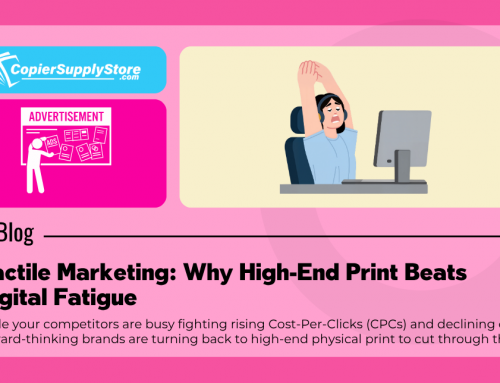
Your customers are drowning in a sea of “unseen” digital notifications. They swipe, clear, and forget thousands of data points every week. But the moment they feel the weight of a 16pt linen-textured card or the velvet-smooth finish of a premium mailer, something chemical happens in the brain. They stop. They touch. They remember.
The Power of Haptic Memory
Haptic memory is the brain’s ability to recall information based on touch. Research shows that physical media is far more “real” to the brain—it has a place, a weight, and a sensory signature. While a digital ad disappears the moment a user scrolls, a tactile printed piece occupies physical space in their home, often sitting on a counter for days.
Finishes That Demand Attention
To win in 2026, your print shouldn’t just be seen—it needs to be felt. Here is how B2C brands are creating “physical pauses”:
-
Velvet (Soft-Touch) Laminate: This creates an immediate sense of luxury and modern “Clean Girl” minimalism. It feels expensive because it is.
-
Embossing & Debossing: By adding 3D depth to your logo or key CTA, you guide the customer’s fingers directly to the most important part of the page.
-
Raw Fibers: Using uncoated, recycled papers with visible grains signals authenticity and sustainability without saying a word.
The ROI of the Physical Pause
Investing in high-quality staples for your wardrobe is common sense; doing the same for your brand’s “wardrobe” is a strategic necessity. Tactile print marketing isn’t just a cost—it’s a conversion tool that builds a level of trust a pixel simply can’t reach.