Let me paint a picture you probably know too well. It is 4:45 PM on a Friday. The quarterly reports are due in exactly fifteen minutes. You hit “Print,” walk over to the machine, and there it is. The glowing, mocking red light of the “Out of Service” sign. Your printer decided to take a nap? Classic. Let’s fix this.
For decades, the entire office supply industry ran on a wildly stressful, reactive model. We all just waited for the hardware to break, called a grumpy technician, and crossed our fingers that the replacement parts were actually in stock. It was a chaotic way to live, and honestly, you handle enough chaos without having to justify a printer supply bill that looks like a mortgage payment.
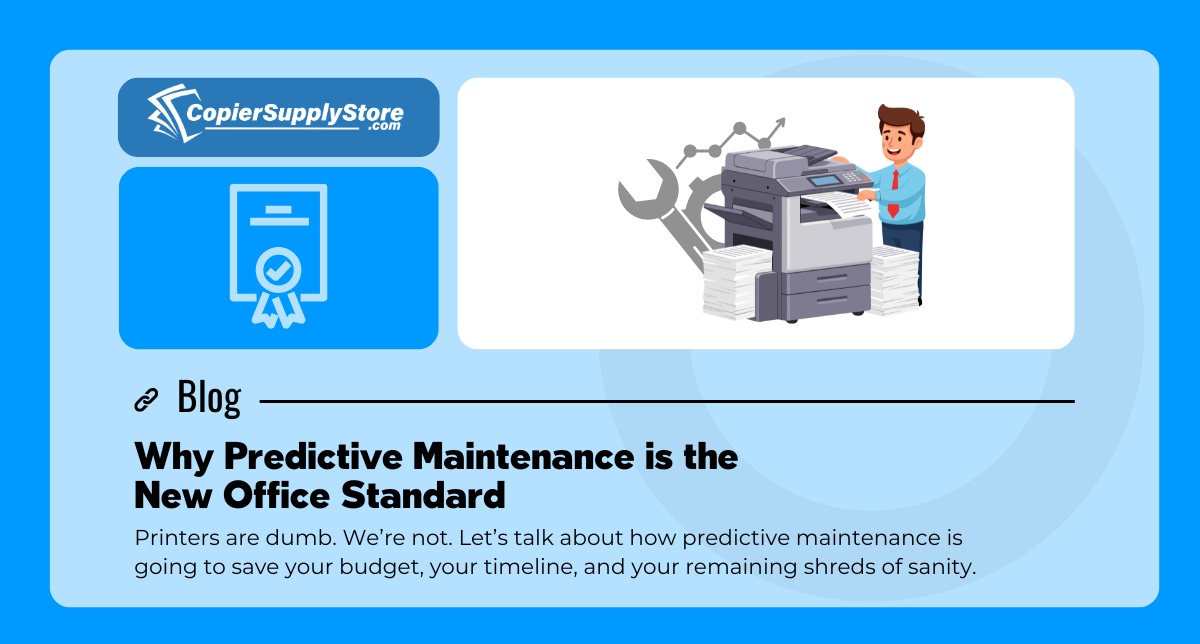
But as we roll through 2026, the era of the surprise breakdown is officially over. Predictive Maintenance (PdM) is here. Powered by artificial intelligence and the Industrial Internet of Things, this tech has gone from a fancy “luxury feature” to an absolute necessity. Printers are dumb. We’re not. Let’s talk about how predictive maintenance is going to save your budget, your timeline, and your remaining shreds of sanity.
What Actually Is Predictive Maintenance?
If traditional preventive maintenance is like changing your car’s oil exactly every 5,000 miles whether it needs it or not, predictive maintenance is like your car texting you to say, “Hey, my left tire is going to blow out next Tuesday at 2 PM if you don’t look at it.”
Instead of relying on a random calendar date to schedule service, predictive maintenance monitors the actual, real-time health of your machine. It uses embedded sensors and smart algorithms to track exactly what is happening inside the hardware.
Listening to the Hardware
AI-driven printers track variables you cannot even see. First, they monitor vibration and sound. They can detect microscopic misalignments in the rollers or motors long before you hear that terrifying grinding noise.
Watching the Thermostat
Next, they monitor heat levels. Fuser temperatures can fluctuate, and if they get too hot, you risk paper jams, melted components, or worse. The sensors catch these spikes instantly to prevent overheating before it causes a fire hazard or a massive part failure.
Tracking the Toner
Finally, they watch the ink and toner flow. The system identifies clogs or air bubbles that could lead to those faded, streaky pages you usually have to reprint five times. It catches the issue early, saving your supplies and keeping your prints looking sharp.
The Three Pillars of the “Zero Downtime” Strategy
So, how does this actually play out in your office? It boils down to three massive upgrades in how we manage office hardware.
1. AI-Powered “Digital Twins”
This sounds like something out of a sci-fi movie, but it is incredibly practical. Leading manufacturers now use “Digital Twins.” These are virtual clones of your physical printers that live safely in the cloud. The artificial intelligence constantly compares your machine’s real-time, physical data against the “perfect” digital model.
When your office printer begins to drift away from peak performance, the system immediately flags it. We are not talking about a warning five minutes before it dies. We are talking about getting a notification 30 to 90 days before a catastrophic failure happens. You get to fix the problem before anyone in the office even realizes there is a problem. You look like an absolute genius to the finance team, and nobody has to panic.
2. Smart Support and Remote Diagnostics
Remember the old days of tech support? You would call, wait on hold for an hour, and then a technician would show up three days later—only to realize they brought the wrong part.
Welcome to 2026. We now have tools like Smart Support Chat. Instead of a technician flying blind into your office, they receive a highly detailed, diagnostic report directly from the machine itself. If they need to visit in person, they show up with the exact part required to fix the issue. Even better, they can often perform a Virtual Service Visit. They tap into the system remotely and fix software-related glitches in under ten minutes. You do not even have to get up from your desk.
3. Lean Supply Management
Let’s talk about the supply closet of doom. You know the one. It is stuffed with twelve random cyan toner cartridges that do not fit any machine currently in the building, but you are somehow entirely out of black toner.
Predictive maintenance does not just fix broken parts; it completely revolutionizes how you manage supplies. These smart machines now order their own toner, ink, and rollers based on actual wear and tear, rather than arbitrary page counts. This eliminates the frantic hoarding of supplies. You get seamless integration and guaranteed performance. You never run out of toner during a massive end-of-year printing run, and you stop wasting money on supplies you do not need. Trees are a vibe. Go green with your printing by only ordering exactly what you will actually use.
The Bottom Line: Why Your Budget Cares
This shift to a predictive model is not just about avoiding a paper jam. It is about cold, hard numbers. When you stop overpaying for emergency fixes and rushed shipping, your budget gets a massive breather.
Here is what predictive maintenance actually delivers:
- 45% Reduction in Downtime: You keep your workflows moving without any sudden interruptions. No more angry coworkers hovering around a dead machine.
- 25% Lower Maintenance Costs: You only pay to replace parts when they are genuinely reaching the end of their life. You squeeze every drop of value out of your hardware.
- Extended Hardware Lifespan: Proactive, regular care can extend the life of a high-volume commercial printer by up to 40%. You do not have to beg the higher-ups for a new equipment budget nearly as often.
The Future is Proactive
Your printer is no longer just a dumb peripheral sitting in the corner collecting dust and jamming when you look at it wrong. It is an intelligent endpoint.
By embracing predictive maintenance, businesses are turning their print infrastructure from a massive bottleneck into a reliable, always-on asset. You have the right to a stress-free workday. You deserve hardware that actually pulls its weight. Stop letting big printer brands and outdated tech bully your budget. Make the smart switch to predictive systems and reliable, cost-effective supplies. Let the machines worry about their own maintenance, so you can get back to running the office like the boss you are.